Reaction Drive Helicopter for DARPA Lift Challenge
A solution for lifting a payload that weighs four times the all-up unladen weight of the vehicle
Reaction Drive leverages thrust generators on individual rotors to eliminate the need for anti-torque measures
Whether by ducted air or gas jets at the tips, or by propeller systems mounted on the rotors, Reaction Drive helicopters have the advantage of employing all of the input power to lifting and transporting payload. Conventional helicopter designs often consume 10-15% of input power just counter-acting the torque that results from turning the main rotor. In principle, Reaction Drive helicopters are capable of lifting massive amounts of weight.
Massive Tip-Jet helicopter
Applicable Patent
Cyclorotor drive units do not suffer fatigue from gyroscopic precession forces. They also provide fine maneuvering control without tilting the rotor disk.
Conventional propeller systems used to propel reaction drive rotors are, in effect, gyroscopes which are forced to constantly precess as the main rotor system turns. Motor drive shafts and propeller blades are flexed twice per shaft rotation by the precession forces.
Cyclo-rotors produce substantial thrust at high efficiency and low fuel consumption rates without excessive fatigue caused by gyroscopic precession forces.
Cyclo-rotors also provide vectorable thrust, which can provide fine maneuvering forces without the need to tilt the rotor disk. System response is fast and precise.
Applicable Patent
Specifications
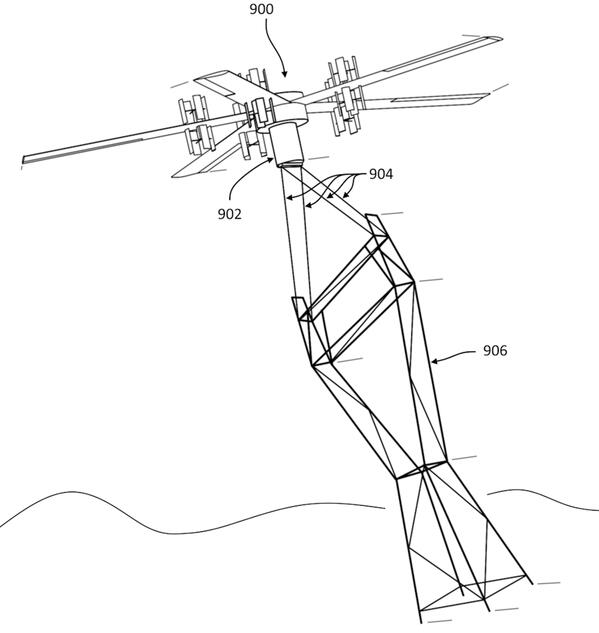
A Reaction Drive Helicopter-Cyclo-rotor configured for the DARPA Lift Challenge and capable of 4+:1 payload ratio would look like this:
- 8 meter span
- 22 Kg OWE
- 2.49 Kgf/m2 disk loading
- 0.056 KW/Kg power/mass
- 5.6 L/hr fuel burn rate
- Cruise 12 m/s
(Current TRL ~4)